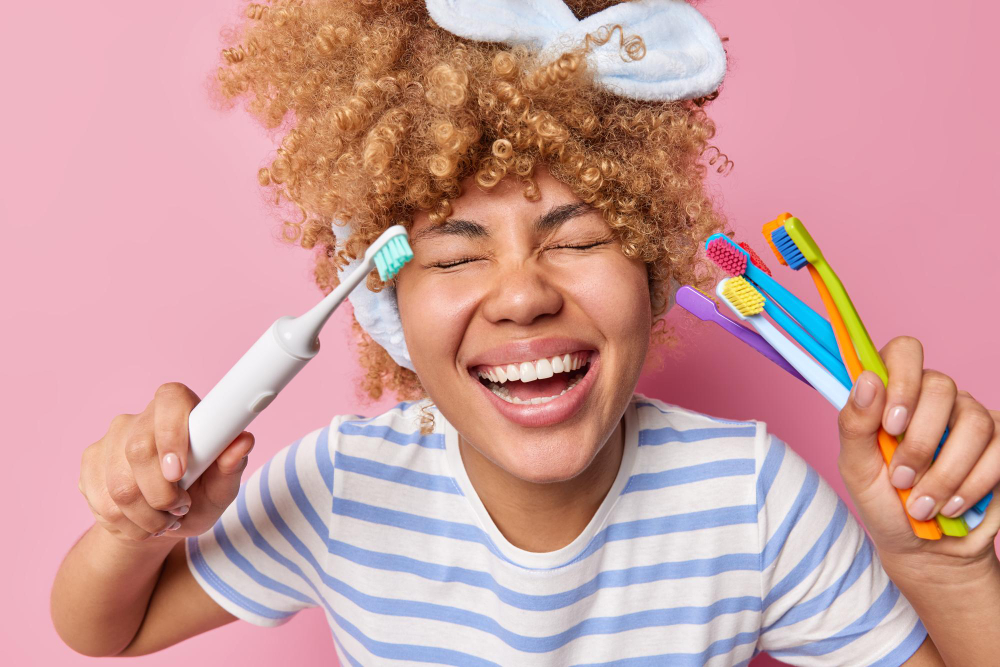
Brushing your teeth twice a day sounds simple enough. But when you stand in front of the bathroom shelf and see dozens of toothbrush options, the decision suddenly becomes less straightforward. Should you stick with the familiar manual toothbrush, or is it time to switch to an electric model?
The debate over an electric vs manual toothbrush has been around for years. While both can play an important role in a healthy oral care routine, they offer very different brushing experiences.
An electric toothbrush brings automation and smart features into your daily routine, while a manual toothbrush keeps things simple and completely under your control. So, is one genuinely better than the other?
Let's take a closer look.
Two Toothbrushes, Two Different Approaches
The biggest difference between these two options is how the brushing motion is created.
With a manual toothbrush, you are responsible for moving the brush across your teeth. The angle of the brush, the amount of pressure you use, and the amount of time you spend brushing are all up to you.
An electric toothbrush does much of the work for you. Its motor moves the brush head rapidly, depending on the technology used. Some models rotate and oscillate, while others use sonic vibrations to clean the teeth.
This doesn't mean that a manual toothbrush is ineffective. In fact, someone with excellent brushing habits can maintain a very good level of oral hygiene with a manual toothbrush. The difference is that an electric toothbrush can make it easier to maintain a consistent routine.
Can an Electric Toothbrush Actually Clean Better?
This is probably the question most people have when comparing an electric vs manual toothbrush.
The short answer is: it can.
Powered toothbrushes have been associated with improved plaque control and reduced gingivitis compared with manual brushing in clinical research. However, the difference isn't simply about having a motor inside the handle.
Technique still matters.
An electric toothbrush used for only a few seconds won't magically give you a clean mouth. Likewise, a manual toothbrush used carefully for two minutes can be highly effective.
The advantage of an electric model is that its movement can help compensate for some common brushing mistakes. Instead of having to create hundreds of brushing movements yourself, you can focus more on positioning the brush correctly and making sure you cover every area.
The Biggest Electric Toothbrush Benefits
Electric toothbrushes have become increasingly popular, and it's easy to see why. Modern models combine everyday brushing with features that can make the experience more controlled and convenient.
A Built-In Timer Can Change Your Routine
Have you ever wondered whether you actually brush for two minutes?
Most people don't time themselves, and it is surprisingly easy to underestimate how long you spend brushing.
Many electric toothbrushes include built-in timers that help you stick to the recommended brushing time. Some even divide the two-minute session into sections, reminding you to move to another part of your mouth.
It's a small feature, but it can encourage a more consistent routine.
Pressure Sensors Encourage Gentler Brushing
More pressure doesn't necessarily mean cleaner teeth.
In fact, brushing aggressively can irritate your gums and contribute to unnecessary tooth wear. Some electric toothbrushes are equipped with pressure sensors that alert you when you're pressing too hard.
For people who tend to brush aggressively, this can be one of the most practical electric toothbrush benefits.
Easier Brushing for Some People
Brushing manually requires repeated hand and wrist movements. For people with limited dexterity or mobility, this can make daily brushing more difficult.
A powered brush can reduce the amount of physical movement required. You still need to guide the brush around your mouth, but the device handles the repetitive brushing motion.
Why Some People Still Prefer Manual Toothbrushes
Despite the growing popularity of electric models, the humble manual toothbrush isn't going anywhere.
And there are good reasons for that.
Simplicity Is a Benefit
A manual toothbrush doesn't need a charger, battery, app, or special settings. Pick it up, add toothpaste, and start brushing.
For many people, that's exactly what they want.
It Is Budget-Friendly
Electric toothbrushes can be considerably more expensive, particularly when you choose a model with advanced features. A manual toothbrush, by comparison, is inexpensive and easy to replace.
If you are already confident in your brushing technique, spending more on dental technology may not feel necessary.
It Is Perfect for Travel
A manual toothbrush takes up very little space in a suitcase or travel bag. You don't have to remember a charging cable or worry about battery life.
For frequent travelers, that simplicity can be a major advantage.
What About Plaque Removal?
Plaque is constantly forming on your teeth. If it isn't removed regularly, it can contribute to cavities, gum problems, and other oral health concerns.
Both manual and electric toothbrushes can remove plaque effectively. The key factors are consistency, technique, brushing time, and reaching all areas of the mouth.
Powered toothbrushes may have an advantage for some users because the automated movement can make thorough brushing easier. But buying an expensive toothbrush does not eliminate the need for good technique.
Think of it this way: an electric toothbrush is a tool, not a shortcut.
Which One Is Better for You?
Instead of asking which toothbrush is universally better, it may be more useful to ask which one fits your lifestyle.
An electric toothbrush could be worth considering if you:
- Frequently rush through brushing.
- Find it difficult to maintain a consistent brushing technique.
- Tend to brush too hard.
- Want a built-in timer or pressure sensor.
- Have difficulty making repetitive hand movements.
- Enjoy using modern dental technology.
A manual toothbrush could be the better fit if you:
- Prefer a straightforward routine.
- Are comfortable with your brushing technique.
- Want to keep costs low.
- Travel frequently.
- Don't need additional features.
There is no prize for choosing the most technologically advanced toothbrush. The goal is simply to keep your teeth and gums clean and healthy.
Don't Forget the Rest of Your Oral Care Routine
Even the best toothbrush cannot clean every part of your mouth perfectly.
Areas between your teeth can be difficult to reach with a toothbrush alone. That's where floss and interdental cleaning tools can become valuable additions to your routine.
Your overall approach to oral care should include regular brushing, cleaning between your teeth, and professional dental checkups when recommended.
In other words, don't let the electric vs manual toothbrush debate distract you from the bigger picture.
Your toothbrush is one piece of your oral hygiene routine—not the entire routine.
Is More Technology Always Better?
Not necessarily.
Today's dental technology can offer impressive features, from pressure monitoring to smartphone-connected brushing feedback. These tools can be helpful for people who want more guidance or motivation.
But technology isn't what makes a healthy smile.
A simple toothbrush used consistently and correctly can still be an excellent oral hygiene tool. On the other hand, someone who struggles with technique or consistency may find an electric toothbrush genuinely useful.
The best choice is the one that helps you build better habits and maintain them over time.