Getting a child to brush their teeth can sometimes feel like negotiating with a tiny lawyer: “Just two minutes!” “But I already brushed yesterday!” “Do I really have to?”
For many parents, tooth brushing becomes a daily challenge. The good news is that children can learn to enjoy taking care of their teeth when brushing is introduced as a normal, positive part of everyday life.
The key is not simply teaching children to hold a toothbrush. It is helping them understand why their teeth need care, showing them the right technique, and giving them enough time and support to develop the habit.
So, if you're wondering how to teach kids to brush teeth effectively, here are some practical strategies that can make a difference.
Start Before Brushing Becomes a Battle
Dental care should begin early. Even before a baby's first tooth appears, parents can gently clean the gums with a clean, damp cloth.
Once the first tooth comes through, brushing should become part of the daily routine. Introducing it early helps children see brushing as something ordinary, just like getting dressed or washing their hands.
The earlier the routine starts, the less likely your child is to see tooth brushing as a new or unwanted activity.
Let Your Child See You Brush
Children are excellent observers. They often want to copy what their parents are doing, which makes your own brushing routine a powerful teaching tool.
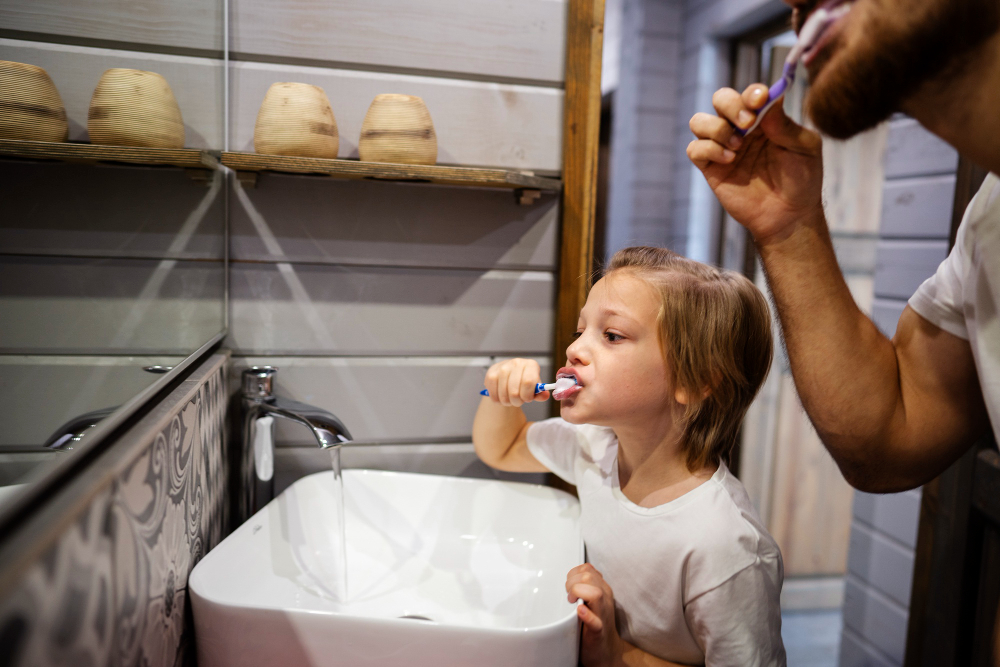
Instead of sending your child to the bathroom alone, try brushing your teeth together.
You can say things like:
“Let's clean all our teeth together.”
Then let your child watch how you move the toothbrush gently around your mouth.
This simple approach turns brushing into a shared activity rather than another instruction from a parent.
Give Them Some Control
Children often resist brushing because they feel that adults are controlling every step.
Giving them small choices can make the experience feel more like their own.
For example, let your child choose:
- Their toothbrush color or design
- Which song to listen to while brushing
- Whether they want to brush first or let you brush first
- Where to keep their toothbrush
These choices may seem small, but they can make a child more willing to participate.
Of course, parents still need to make sure the teeth are cleaned properly.
Teach the Technique Slowly
A common mistake is expecting a young child to understand the entire brushing process immediately.
Instead, break it into simple steps.
Show your child how to place the toothbrush against the teeth and move it gently. Encourage them to clean the front, back, and chewing surfaces of their teeth.
Don't forget the gumline, where plaque can easily accumulate.
Children do not need a complicated dental lesson. They need a simple technique they can repeat every day.
As their coordination improves, you can gradually give them more responsibility.
How Much Fluoride Toothpaste Should Children Use?
Parents often have questions about fluoride for kids, especially when their child is very young.
Fluoride is an important ingredient in preventing cavities because it helps strengthen tooth enamel. However, the amount of toothpaste a child should use depends on their age and individual circumstances.
Rather than guessing, parents should follow recommendations from their child's dentist or trusted dental health guidance.
A pediatric dentist can also explain which toothpaste is appropriate and how much should be used.
The important thing is to make fluoride toothpaste part of a consistent brushing routine while using an age-appropriate amount.
Should You Brush Your Child's Teeth for Them?
For young children, the answer is often yes—or at least partly.
Children may be enthusiastic about brushing but still lack the coordination to clean every tooth effectively. They might focus on the front teeth while completely forgetting the back ones.
A useful approach is to let your child have a turn first and then finish the brushing yourself.
As your child gets older and develops better motor skills, you can gradually step back.
Think of it as teaching them to ride a bike: you provide support until they are ready to manage on their own.
Make Two Minutes Feel Shorter
Two minutes can feel incredibly long to a young child.
Instead of repeatedly saying, “Keep brushing,” make the time more interactive.
Try:
- A two-minute brushing song
- A visual timer
- A favorite children's song
- A simple brushing game
- A sticker chart for consistent brushing
You can even create a little “tooth detective” game and ask your child to find areas they may have missed.
The objective is not to distract children from brushing. It is to make the routine engaging enough that they don't constantly watch the clock.
Don't Turn Cavities Into a Scary Story
It can be tempting to tell children, “If you don't brush, you'll get cavities and the dentist will have to fix your teeth.”
While parents usually mean well, fear-based messages can make children anxious about dental care.
Instead, use positive language.
Explain that brushing removes the food particles and plaque that can hurt teeth and helps keep their smile healthy.
The same approach can be helpful when talking about dental appointments. A positive introduction to pediatric dentistry can help children develop a healthier attitude toward dentists.
Nighttime Brushing Deserves Special Attention
Morning brushing is important, but parents should also make sure brushing is part of the bedtime routine.
Children may be tired at night and more likely to resist. This is exactly why consistency matters.
Try creating a predictable sequence:
Bath → pajamas → brush teeth → bedtime story → sleep
When brushing always happens at the same point in the routine, children are less likely to see it as something they can negotiate away.
What About Snacks and Sugary Drinks?
Brushing is only one part of good children's oral hygiene.
What children eat and drink throughout the day also matters. Frequent exposure to sugary foods and drinks can increase the risk of tooth decay.
Parents can support healthy teeth by offering a variety of nutritious foods and choosing water as a regular drink.
You don't have to make every treat forbidden. The bigger goal is to create balanced habits and avoid making sugary snacks and drinks an all-day, everyday occurrence.
Regular Dental Visits Are Part of the Routine
Home brushing cannot replace professional dental care.
Regular visits to a dentist experienced in pediatric dentistry allow your child's teeth and gums to be monitored as they grow. Dental professionals can identify potential concerns early and help parents adjust their child's oral-care routine when necessary.
These visits are also an opportunity to ask questions.
Is your child using enough toothpaste? Are they brushing effectively? Is their fluoride exposure appropriate? When should they start brushing without help?
Instead of trying to figure everything out alone, parents can use dental appointments as a source of personalized guidance.
Be Patient When Progress Is Slow
Some children will happily pick up a toothbrush. Others will resist it every morning and evening.
Neither situation means you are failing as a parent.
Building dental habits takes repetition. There may be days when brushing goes perfectly and other days when it turns into a struggle.
Stay consistent, keep your expectations realistic, and continue demonstrating good habits yourself.
Over time, the routine becomes familiar—and familiar routines are much easier for children to follow.
A Healthy Smile Starts With Small Habits
Teaching a child to brush their teeth isn't about achieving perfect technique from day one.
It is about creating a routine that your child understands, accepts, and eventually takes ownership of.
Use an appropriate toothbrush, introduce fluoride toothpaste correctly, supervise brushing when necessary, keep the experience positive, and maintain regular dental visits.
Most importantly, remember that children learn by watching and repeating. When they see the adults around them treating dental care as a normal part of life, they are more likely to do the same.
With patience and consistency, those two minutes at the bathroom sink can become one of the simplest—and most valuable—habits your child carries into adulthood.